
Updated: April 2026
Sydney Harbour transforms from a bustling waterway into an angler’s paradise when you know where to drop your line. With over 240 square kilometres of pristine waters and countless secluded bays, the harbour offers some of Australia’s finest fishing opportunities right on your doorstep. Whether you’re chasing snapper around the heads, targeting flathead in the shallows, or hunting pelagic species in deeper waters, having your own boat opens up fishing spots that shore-based anglers can only dream of reaching.

Coral
No licence required · up to 6
Fish every spot on this page — full training at the wharf, rod holders, ice box, BYO welcome.
From $400 · 3-hr hire, fuel included

Axopar 28
Licence required · up to 8
Range for the Heads, the reefs and everywhere between — the serious angler’s hire boat.
From $795
What are the best fishing spots in Sydney Harbour accessible by boat?
The premier fishing locations include Middle Harbour’s sandy flats for flathead, the rocky drop-offs near North Head for snapper, Manly Cove’s weed beds for bream, and the deep channels around Fort Denison for kingfish and tuna during summer months.
Middle Harbour stands out as Sydney’s most productive fishing destination, stretching from The Spit Bridge to Bantry Bay. The expansive sand flats between Castlecrag and Seaforth harbour massive schools of dusky flathead, particularly during the warmer months from October through March. Target depths of 3-8 metres using soft plastics or live yabbies, focusing on the channel edges where the sand meets rocky structure.

The rocky headlands around North Head and South Head create perfect ambush points for snapper, with fish aggregating around the kelp beds and rocky drop-offs. The area known as “The Bombora” – a submerged reef system northeast of North Head – consistently produces quality snapper, morwong, and the occasional jewfish. Best fished on the change of tide with fresh baits like prawns, squid, or pilchards.
Manly Cove’s protected waters offer excellent bream fishing year-round. The extensive Posidonia seagrass beds provide perfect habitat for yellowfin bream, with fish averaging 25-35cm. Light tackle enthusiasts will find this spot particularly rewarding, especially during the pre-spawn period from August to October when bream feed aggressively.
For pelagic species, the deeper channels around Fort Denison and between the harbour heads become highways for kingfish, bonito, and Australian salmon during their seasonal migrations. Summer months bring schools of frigate tuna and the occasional longtail tuna into the harbour proper.
Which fish species can you catch in Sydney Harbour throughout the year?
Sydney Harbour supports over 600 fish species including flathead, bream, snapper, kingfish, whiting, leatherjacket, trevally, and seasonal visitors like tuna, bonito, and tailor. Each species follows distinct seasonal patterns and habitat preferences.
Dusky Flathead dominate the harbour’s sand and mud flats from September through April, with peak activity during warmer months. These ambush predators inhabit depths from 1-15 metres, preferring areas where sand meets rocky structure or weed beds. Average sizes range from 40-60cm, with legal minimum at 36cm.
Yellowfin Bream provide consistent year-round fishing, particularly around structured areas like jetties, rocky shores, and seagrass beds. Winter months often produce the largest specimens as fish school up for spawning. Legal size starts at 25cm, with fish commonly caught between 25-40cm.
Snapper follow seasonal migration patterns, with juveniles inhabiting the harbour year-round while larger breeding fish move in during autumn and winter. Target rocky areas, kelp beds, and deep holes using baits or lures. Minimum legal size is 30cm, though most harbour snapper range from 30-50cm.
Australian Salmon arrive in massive schools during autumn and winter, often feeding on surface baits and creating spectacular fishing action. These silver torpedoes average 30-40cm and respond well to metal lures and fresh baits.
Kingfish patrol deeper waters and current lines, particularly during summer months. Juvenile kings inhabit the harbour year-round, while larger specimens visit during warmer weather. Minimum size is 65cm, making this a trophy species for harbour anglers.
When are the best seasons and tides for fishing Sydney Harbour?
Prime fishing occurs during autumn (March-May) and spring (September-November) when water temperatures stabilise and fish feed actively. Fish the two hours either side of tide changes, particularly during morning and evening periods.
Autumn represents Sydney Harbour’s peak fishing season as water temperatures begin cooling from summer highs, triggering aggressive feeding behaviour across multiple species. Snapper move into shallower waters to feed before winter, while flathead remain active in the warming sand flats. Australian salmon schools arrive in massive numbers, creating some of the year’s most exciting fishing.
Spring fishing excels as waters warm and marine life becomes increasingly active after winter’s quiet period. Bream begin their pre-spawn feeding phase, flathead emerge from deeper winter haunts, and pelagic species start their northward migration through harbour waters.
Tide movement creates the critical feeding triggers that activate harbour fish. The two hours before and after high tide often produce the best results, particularly when fishing rocky areas and drop-offs. Moving water brings baitfish and nutrients, triggering the food chain from bottom to top.
Early morning sessions from first light until 9am consistently outperform midday fishing, with fish more active in lower light conditions. Similarly, the last two hours of daylight often produce excellent results, particularly for surface-feeding species like salmon and trevally.
Moon phases significantly influence fishing success, with new moon periods generally producing better results than full moon phases. The reduced light allows predators to hunt more effectively while prey species become more vulnerable.
What NSW fishing regulations and licensing requirements apply to harbour fishing?
All anglers over 18 require a NSW recreational fishing licence ($7 for three days, $15 for one month, $45 annually). Bag limits, size restrictions, and closed seasons apply to various species, with heavy penalties for violations including boat confiscation.
The NSW recreational fishing licence system applies to all harbour waters, with no exemptions for private boat fishing. Licences can be purchased online through the NSW DPI website or from authorised agents including tackle shops and service stations. Children under 18 fish for free when accompanied by a licensed adult.
Bag limits strictly control daily catches: flathead (10 fish), bream (20 fish), snapper (10 fish), whiting (30 fish), and trevally (20 fish). These limits apply per person per day, regardless of fishing method or location within harbour waters.
Size restrictions protect breeding stocks: flathead (36cm minimum), bream (25cm minimum), snapper (30cm minimum), jewfish (70cm minimum), and kingfish (65cm minimum). Measuring boards are essential equipment, with all borderline fish requiring accurate measurement.
Closed seasons protect key species during spawning periods. Murray cod, Australian bass, and estuary perch have specific closed seasons, though these primarily affect upper harbour tributaries rather than main harbour areas.
Gear restrictions limit fishing methods to protect both fish stocks and other harbour users. Commercial fishing nets are prohibited for recreational users, while multiple hook restrictions apply in certain areas. Spearfishing requires separate endorsements and has additional equipment restrictions.
What fishing equipment and tackle work best in Sydney Harbour conditions?
Medium spinning outfits with 10-15lb line handle most harbour species effectively. Essential tackle includes soft plastics, hard bodied lures, fresh baits like prawns and squid, circle hooks, sinkers, swivels, and a quality landing net for boat fishing success.
Rod selection depends on target species and fishing locations. A 7-foot medium action spinning rod covers most harbour fishing scenarios, from flathead in shallow bays to snapper around rocky headlands. Pair this with a 3000-4000 size spinning reel loaded with 10-15lb monofilament or 10-20lb braided line.
Soft plastic lures dominate harbour fishing, particularly for flathead and bream. Proven patterns include 4-5 inch paddle tail plastics in natural colours like pearl, motor oil, and watermelon. Jighead weights from 1/4oz to 1oz cover various depths and current conditions.
Hard bodied lures excel for pelagic species and schooling fish. Shallow diving minnows in 70-100mm lengths work well for salmon, trevally, and surface-feeding kingfish. Metal slugs and vibes effectively target deeper water species and can be cast long distances to working fish schools.
Fresh baits remain highly effective, particularly for snapper, bream, and flathead. School prawns, fresh squid strips, and pilchards account for numerous quality fish. Yabbies work exceptionally well for flathead, while beach worms trigger aggressive bites from bream and whiting.
Terminal tackle requirements include circle hooks (sizes 2-2/0 for most species), running sinker rigs, quality swivels, and strong leaders. Fluorocarbon leaders reduce visibility in clear harbour water while maintaining strength for rocky structure fishing.
What safety considerations apply specifically to fishing from boats in Sydney Harbour?
Key safety priorities include wearing life jackets, monitoring weather conditions and marine traffic, maintaining VHF radio contact, carrying safety equipment, understanding right-of-way rules, and informing others of fishing plans and expected return times for harbour fishing trips.
Sydney Harbour’s heavy commercial and recreational traffic demands constant awareness of surrounding vessel movements. Large ferries, cruise ships, and commercial vessels have limited manoeuvrability and require significant stopping distances. Maintain safe distances from shipping channels and commercial wharves, particularly around Circular Quay and Darling Harbour terminals.
Weather conditions can change rapidly on harbour waters, with afternoon sea breezes creating choppy conditions unsuitable for small boat fishing. Morning sessions typically offer calmer conditions, while afternoon winds from 15-25 knots are common during summer months. Check Bureau of Meteorology marine forecasts before departure.
Life jacket requirements apply to all boat occupants while fishing, with inflatable PFDs offering comfort during long fishing sessions. Additional safety equipment includes EPIRB or satellite communicators for emergency situations, though most harbour areas maintain mobile phone coverage.
Anchor safety becomes critical when fishing structure or drop-offs in current. Use adequate anchor weight for vessel size and conditions, deploy sufficient chain and rope scope, and monitor anchor drag particularly during tide changes. Breakaway anchors prevent loss when snagged on harbour bottom structure.
Right-of-way rules prioritise commercial vessels, ferries, and larger recreational boats over small fishing craft. When fishing near shipping channels or ferry routes, be prepared to move quickly if required. Fishing near seaplane operations around Rose Bay requires additional vigilance for low-flying aircraft.
Should you choose self-drive or skippered fishing boat options for harbour fishing?
Self-drive boats suit experienced anglers who know harbour fishing spots and navigation, while skippered charters benefit beginners, groups wanting to focus purely on fishing, or visitors unfamiliar with local waters and regulations.
Self-drive fishing boats provide ultimate flexibility for harbour fishing adventures. Our self-drive boat hire options allow experienced anglers to target specific species and locations based on conditions and personal preferences. You control timing, fishing spots, and techniques without restrictions imposed by charter schedules or other passengers’ preferences.
Cost advantages favour self-drive options for full-day fishing trips, particularly for small groups of 2-4 anglers. Self-drive fishing boats eliminate crew costs and allow extended fishing sessions limited only by fuel capacity and hire duration. However, self-drive requires boating experience, harbour navigation knowledge, and understanding of local fishing regulations.
Skippered fishing charters excel for beginners, corporate groups, or special occasions where participants prefer focusing entirely on fishing rather than boat operation. Professional skippers provide local knowledge, equipment expertise, and navigation skills while handling all vessel operations and safety requirements.
Our fishing boat hire includes vessels specifically equipped for harbour angling. Queen Royal, a 43-guest sailing yacht at $200/hour, features dedicated fishing equipment and spacious deck areas perfect for group fishing charters. The vessel’s sailing capability allows quiet approach to fishing spots without engine noise disturbing fish behaviour.
For larger fishing groups, Ali B accommodates up to 45 guests at $600/hour with extensive deck space, BBQ facilities for cooking fresh catches, and a swim platform for easy fish handling. The catamaran’s stability provides an excellent fishing platform even in harbour chop conditions.
Which specific boats in our fleet work best for different types of harbour fishing?
Queen Royal suits dedicated fishing charters with built-in fishing features, while Ali B and Alila provide stable platforms for group fishing. Magic accommodates large fishing parties, and Allo offers intimate fishing experiences for smaller groups seeking personalised harbour adventures.
Queen Royal stands as our premier fishing vessel, purpose-equipped with fishing infrastructure including rod holders, bait preparation areas, and spacious decks for multiple anglers. At $200/hour for up to 43 guests, this sailing yacht offers exceptional value for serious fishing charters. The vessel’s shallow draft allows access to harbour flats where larger boats cannot venture.
Ali B’s catamaran design provides remarkable stability for fishing activities, crucial when targeting species requiring precise lure presentations or when fighting larger fish. The 45-guest capacity at $600/hour includes BBQ facilities perfect for cooking fresh catches, while the swim platform facilitates easy fish handling and release procedures.
Alila offers the perfect balance between capacity and intimacy for fishing groups of up to 30 people at $450/hour. The catamaran’s twin-hull design creates a stable fishing platform with ample deck space, while the full kitchen allows preparation of fresh catches during extended fishing sessions.
For intimate fishing experiences, Allo accommodates up to 20 guests at $350/hour with all essential fishing amenities. The smaller group size allows personalised attention to individual fishing techniques while maintaining the social atmosphere that makes harbour fishing memorable.
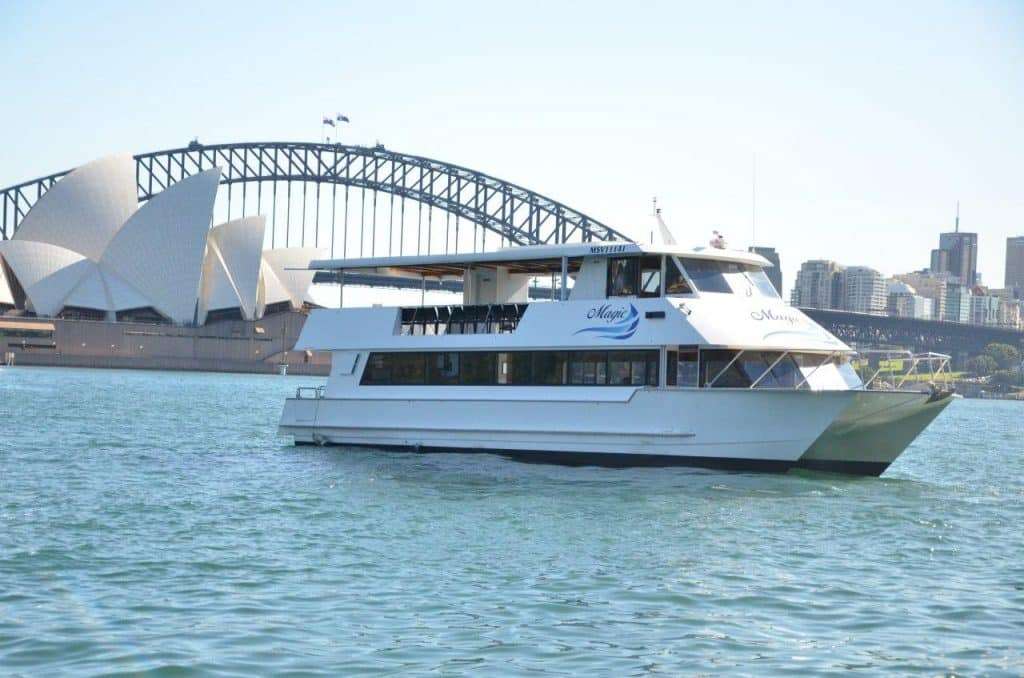
Magic transforms into a fishing mothership for large groups up to 120 guests at $600/hour. While not specifically fishing-focused, the vessel’s size and facilities support major fishing events, corporate fishing days, or family fishing reunions where diverse entertainment options complement the angling activities.
What local knowledge about tides and weather patterns improves fishing success?
Harbour fishing peaks during 10-15 knot northeast winds which push baitfish into sheltered bays. Incoming tides activate feeding, while outgoing tides concentrate fish around structure. Avoid strong southerly winds and fish protected northern shores during adverse conditions.
Sydney Harbour’s unique geography creates distinct micro-climates and fishing conditions throughout different areas. The harbour’s east-west orientation means northern shores receive protection from southerly winds while southern shores offer shelter during northeasterly conditions. Understanding these patterns allows strategic positioning for optimal fishing conditions.
Tide patterns in Sydney Harbour follow a semi-diurnal cycle with two high tides and two low tides daily, though the harbour’s numerous bays and tributaries create complex current patterns. Middle Harbour experiences delayed tide changes compared to the main harbour, often providing continued fishing action when main harbour tides have already turned.
Wind direction significantly influences baitfish behaviour and subsequently predator fish feeding patterns. Northeast winds of 10-15 knots create ideal conditions by pushing surface waters and baitfish toward sheltered western shores of harbour bays. These conditions concentrate feeding opportunities and trigger aggressive fish behaviour.
Barometric pressure changes preceding weather fronts often stimulate intense feeding activity as fish sense approaching conditions. The 12-24 hours before cold front arrival frequently produce exceptional fishing, while post-frontal conditions typically slow fish activity for 1-2 days.
Seasonal temperature variations affect fish metabolism and feeding patterns. Water temperatures above 18°C activate most harbour species, while temperatures below 14°C significantly reduce feeding activity except for winter species like snapper and morwong.
Current lines formed by tide movement create natural feeding zones where different water masses meet. These convergence zones concentrate plankton, baitfish, and subsequently predator fish. Visible lines of debris, foam, or colour changes often mark these productive fishing areas.
Ready to experience Sydney Harbour’s incredible fishing opportunities? Our diverse fleet of fishing boats provides options for every angling adventure, from intimate self-drive fishing trips to large group charters with professional guidance. Browse our comprehensive fishing guide for detailed species and location information, then contact Boatique Sydney Boat Hire to book your harbour fishing adventure. Whether you’re chasing your first harbour flathead or planning a corporate fishing day for 100 guests, we’ll match you with the perfect vessel for an unforgettable day on Sydney’s premier fishing grounds.
Looking for more information? See our guide to Fishing Boat Hire Sydney.
Looking for more information? See our guide to Fishing Spot Boat Hire Sydney.
class=”rank-math-block”>
The vessel matters as much as the spot: fishing boat hire Sydney. Related reading: boats with fishing gear included and what is biting by season.