
Hiring a boat as a shoot platform is the cheat code of Sydney photography and film work: angles on the Opera House, Harbour Bridge and the eastern shorelines that no land position can give you, moving-water production value for a few hundred dollars an hour, and total control of your own floating studio. But a boat shoot is a logistics exercise before it’s a creative one — the light moves, the deck moves, and the harbour has rules. This page covers choosing the right vessel, timing the light, the permit and drone realities, and the small operational habits that separate smooth shoot days from expensive drifting. (If you’re after the reverse — a photographer to shoot your boat day — that’s our boat hire photography service; this page is about hiring the boat itself as your platform.)
Find a shoot-ready boat
Pricing, photos and open dates across the fleet.
Which boat suits a shoot?
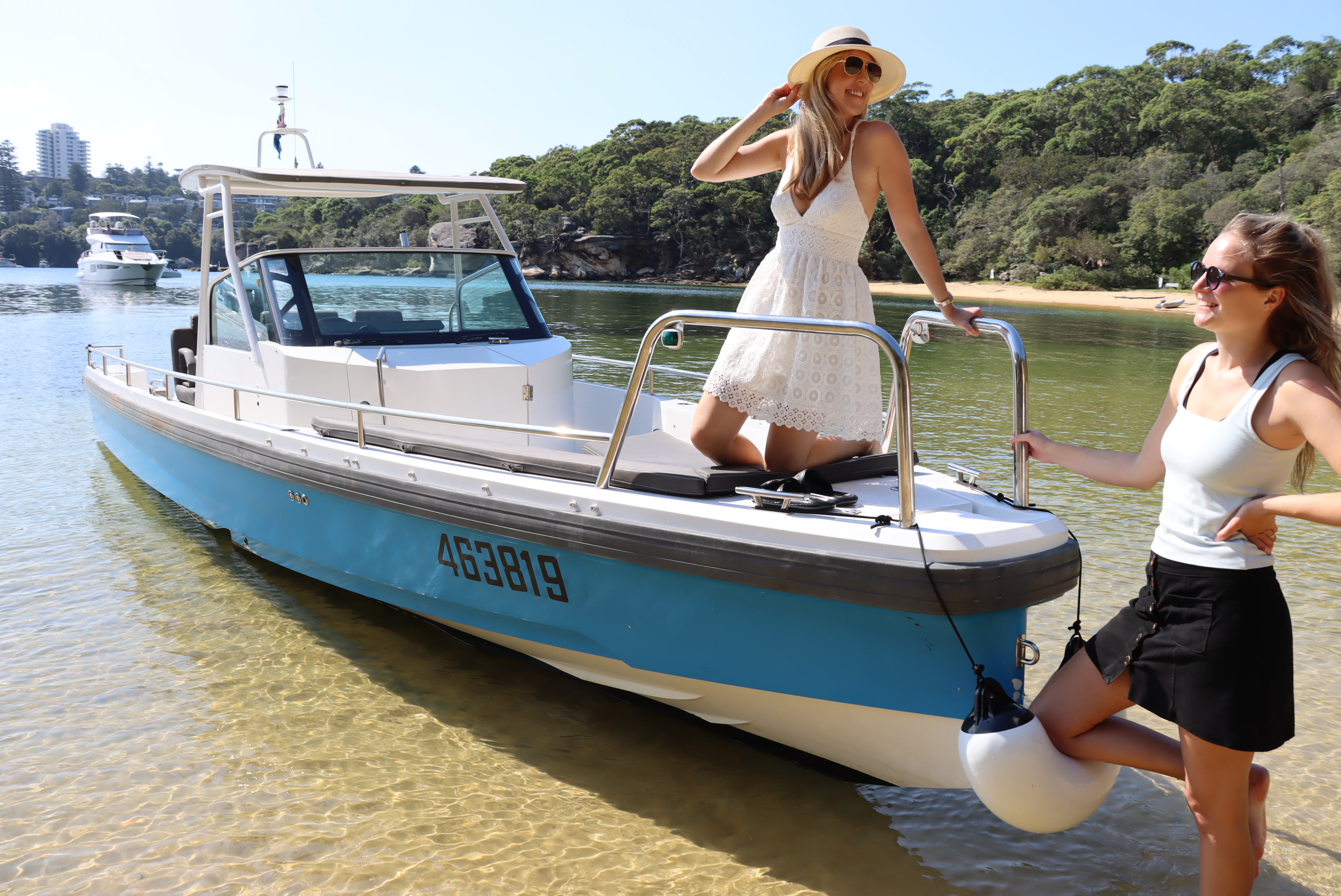
Brief-dependent, but the pattern holds across the shoots we’ve hosted from our 180+ boat fleet. Camera platform work (shooting the city, another vessel, talent on a beach): you want stability and clear deck space more than glamour — a mid-size cruiser with open aft deck and side access lets a two-or-three-person crew work without tripping over each other, in the $500–$900/hr band. The boat as the set (fashion, lifestyle, brand content aboard): now the vessel’s look is the casting decision — teak, white hulls, flybridges and swim platforms all read differently on camera, and the luxury end of the fleet earns its rate as art department. Small, agile and cheap (a scout day, social content, a solo creator): small BYO-style boats from $200–$400/hr do the job, and our self-drive Coral works for self-sufficient creators who want full control of position and schedule — though for most commercial work you’ll want the next paragraph’s advice instead. Tell us the brief when you enquire — matching hulls to shot lists is a solvable problem with 180 boats to choose from, and a quote request with “it’s a shoot” in it gets the right shortlist first time.
Why book skippered for a shoot, even if you could self-drive?
Because on a shoot, the helm is a full-time job that competes with your actual job. Holding a boat on station against wind and tide while a photographer calls “two metres left, hold it there” is genuinely skilled work; a professional skipper does it all day, reads the ferry traffic before it wrecks your take, and knows where the water will be calm enough for the tight shot at 4pm. Skippers also solve the position problem: they’ll hold bow-to-swell so the deck stays workable, edge you to the exact line where the bridge stacks behind the sails, and re-run the pass six times without complaint. Every hour your director spends thinking about boat handling is an hour of light you paid for and didn’t shoot. Self-drive has its place — scouting, solo content days, budget socials — but crewed platforms are the professional default for the same reason camera cars come with drivers.
When is the light — and the water — best?
Plan light and water together, because on the harbour they move in opposite directions through the day. Dawn to mid-morning is the premium window: golden light on the city’s eastern faces, and the day’s flattest water — critical, since calm water is both your stabiliser and your reflection pool. Morning also front-lights the Opera House and southern shore from the water. Afternoon flips the flattering side — Kirribilli, Luna Park and the bridge’s western face glow — but summer afternoons bring the nor’easter, which means chop, spray on lenses and a working deck that moves; if the brief needs afternoon gold, favour autumn and winter shoot dates, when afternoons stay glassy and the light angles run lower and kinder all day. Blue hour from the water is Sydney’s most underused shot — city lights igniting over still water — and needs a boat with proper navigation lighting and a skipper comfortable working in traffic after dark: another crewed-platform argument. Build weather flex into the booking from the start; one reschedule conversation early beats a grey-sky invoice.
What about permits, drones and the rules?
Three flags to check before the call sheet goes out — early, because none of them are on-the-day fixes. Commercial filming on and around the harbour can require permissions depending on scale, locations and what you’re doing — foreshore land, national park backdrops and commercial activity on the water each have their own gatekeepers (Port Authority, NSW National Parks, local councils among them). Check the current requirements for your specific shoot rather than assuming a quiet setup flies under every radar; production insurance questions land here too. Drones are their own project: Sydney Harbour sits under layered, seriously enforced airspace restrictions — seaplanes work this water daily — and CASA rules plus local restrictions decide what’s possible, not your drone’s range. If aerials matter, engage a licensed drone operator who holds the approvals; they’ll know in one phone call what would take you a week to establish. On the water itself, the boat must keep to the ordinary rules — speed zones, distances from ferries, swimmers and other vessels — whatever the shot wants; our zones and speed limits guide is the plain-English primer, and a skippered booking makes compliance somebody’s actual job.
How do you run the shoot day smoothly?
Boat-shoot habits that pay for themselves: build the shot list around positions, not just shots — group everything from each stretch of water and shoot it together, because repositioning costs minutes every time and the light won’t wait. Rig for motion: straps or padded bins for every case, lenses capped between takes (salt spray is patient), a dry bag per crew member, and one deck towel per camera — the unglamorous kit that saves the glamorous kit. Brief the skipper like crew, because they are: share the shot list before departure, agree hold positions and hand signals, and use their local knowledge — skippers know where the water goes glassy at 5pm and which bays hide a southerly, and that knowledge is free production design. Pad the schedule 20% — everything afloat takes slightly longer, and the buffer is where the unplanned best shot of the day lives. And scale the boat to the crew: talent, HMU, client observers and gear multiply fast; the corporate-scale vessels in the corporate fleet exist for shoots that grew a village.
Frequently asked questions
How much does it cost to hire a boat for a photo shoot?
Small boats from $200–$400/hr, mid-size crewed platforms $500–$900/hr, with winter typically 20–40% below summer. Tell us the brief and we’ll shortlist to budget from 180+ vessels.
Can the skipper hold a position for repeated takes?
Yes — station-holding and repeat passes are standard skipper work, and precisely why crewed boats are the shoot default. Share the shot list beforehand and it gets faster still.
Do I need a permit to film from a boat in Sydney?
Possibly — it depends on scale, locations and commercial nature. Check current requirements with the relevant authorities (Port Authority, NPWS, councils) early in pre-production rather than assuming.
Can we fly a drone from the boat?
Only within CASA rules and the harbour’s layered airspace restrictions — which are significant. For commercial aerials, use a licensed drone operator who holds the approvals.
What’s the best time of day to shoot on the harbour?
Dawn to mid-morning: golden light plus the day’s calmest water. For afternoon-gold briefs, book autumn or winter dates when the water stays workable past lunch.